Total Railway News
 Water, water, everywhere..still, with no apparent let up in wild weather conditions.
In the meantime, engineers continue on with repairing the Dawlish breach...but further mainline trouble for Chiltern Railways with a landslip at Harbury... It doesn't rain but it pours...
Water, water, everywhere..still, with no apparent let up in wild weather conditions.
In the meantime, engineers continue on with repairing the Dawlish breach...but further mainline trouble for Chiltern Railways with a landslip at Harbury... It doesn't rain but it pours...
We also take a look at the Transport Select Committee's recommendations to keep the controversial (especially if Camden's experience is anything to go by) HS2 project "On The Right Track."...the report on the failed WCML franchise bids, and an open access operator throws its hat into the ring.....
Crossrail have opened Paddington's Eastbourne Terrace to buses.. another development in the "on time" and "on budget" success story that is Crossrail.
There must be a lesson for HS2 here, given the excellent PR that Crossrail undertakes though well planned communications to all those affected by specific works along the route.
On the European front, Shift2Rail reaches 100 promoting organizations, and UIC (International Union of Railways) reports on innovating for the future operations of pan European railways.
Read On.....
Headlines
British train project on fast track to controversy. (Adam Skuse, Global Times)
France’s high-speed rail network is worth $2 billion less than it was a year ago.(Quartz)
HS2: Another crammed public meeting, another legion of opponents to high speed rail chaos.(Camden New Journal)
Harbury landslip shuts Birmingham-Marylebone rail line. (BBC News)
São Paulo opens first of new line 5 stations.(Global Rail News)
Open access operator submits East Coast application.(Global Rail News)
Bombardier's Crossrail tender team deserve the most credit.(Derby Telegraph)
Transport network has 'taken a battering'(The Telegraph)
Clearest message yet that three-hour rail journeys for Plymouth are a priority.(Plymouth Herald)
Councils battle between themselves over HS2 station .(BBC News)
Last train to run on Oxford to Bicester line before revamp.(BBC News)
Train derailment avoided by chance. (BBC News)
South East flooding: How has the region coped?(BBC News)
Timelapse video reveals Dawlish rail work.(BBC News)
2014 EU budget adjustments, two new budget lines created for Shift2Rail (S2R).(Think Railways)
UIC: Rail Technical Strategy Europe (RTSE) published.(Think Railways)
RTSE Report available here..
Battered and bruised but not forgotten by the Government.(This is Cornwall)
Horror and heroism on Hull’s railways. Remembering the 1927 Valentine’s Day rail crash which killed 12 near Paragon Station.(Hull Daily Mail)
Shift2Rail
SHIFT²RAIL Reaches 100 Promoting Organisations
UNIFE—the European Rail Industry Association, on behalf of the promoting organisations of SHIFT²RAIL, is pleased to announce that more than 100 organisations (rail manufacturers, railway undertakings, infrastructure managers, research institutes and universities and SMEs) have committed to bringing their expertise to the SHIFT²RAIL initiative during its preparatory phase.
This is a major milestone since 2011 when the European rail sector began preparing this ambitious, multiannual, large-scale, market oriented and industrially-driven Research and Innovation programme with the goal of making rail transport more attractive to millions of European passengers and freight users and boosting the competitiveness of the most sustainable transport mode.
These 100 organisations operate throughout the European Union with a presence in nearly every EU member state. On this European-wide scale, SHIFT²RAIL will encompass research, innovation and demonstration activities in all aspects of the rail system, amounting to €920 million, co-financed by the EU and the private sector under the Horizon2020 budget across the 7 year lifespan of the initiative.
SHIFT²RAIL will not only maintain and improve the competitiveness of EU industry against growing competition from abroad, but it will overcome some of the present deficiencies of the EU rail market, namely: fragmentation of production, low collaboration and partnership among the rail industry, different operating procedures among RUs, low standardisation and low efficiency.
The promoting companies, in support of the European Commission’s proposal for a Council regulation to establish the SHIFT²RAIL Joint Undertaking, are awaiting an opinion from the Parliament and hope to see adoption by the Council before the end of the Greek Presidency in June. If this process goes as expected, the JU will be formed and R&D activities could begin as early as 2015.
The promoting companies, potential Greek stakeholders, the Greek Presidency, and high-level representatives from the European Institutions will hold a conference on SHIFT²RAIL in Athens, Greece on 19 February. If you would like to learn more about this event, please contact
john.harcus@unife.org.
To view all of the promoting organisations, please visit
http://www.shift2rail.org/promoters/
International Union of Railways (UIC)
Innovating for the future European rail system
With the recent publication of both the 1st Call of Horizon 2020 and the draft regulatory text for the SHIFT²RAILinitiative, the European Rail Operating Community (ROC) is preparing for the start of a very exciting period.
The first half of 2014 will see the launch of a whole range of initiatives that lead towards an attractive and innovative future rail system.
With a budget of 70 billion € over seven years, Horizon 2020 will support active research and innovation developments to the benefit of the whole European economy. For 2014-2015, 52 million € have specifically been allocated for specific work in the rail sector that is centred on three core topics:
- I²I - Intelligent Infrastructure
- Smart Rail Services
- New generation of rail vehicles
Together with this specific rail budget, the whole 1st call of Horizon 2020 presents a considerable number of opportunities for the ROC. Working collaboratively it will enable the ROC to prepare and submit proposals which will help the sector to prepare for the challenges ahead. These challenges relate to the design, construction, operation and maintenance of the future rail system and support the main objectives set out in the Challenge 2050 business vision.
The UIC European Region is, through its Research and Innovation Coordination Group (RICG), actively supporting companies in the preparation of consortia and relevant proposals to be submitted.
More can be found about Horizon 2020 by clicking here:
http://ec.europa.eu/programmes/hori...
The creation of a regional approach as part of the multi-regional architecture of UIC commenced in 2008. This allows programmes and activities to be tailor-made to meet the specific need of each region.
The UIC-Europe region comprises 117 member companies from 39 countries (including Russia and Turkey) and amounting to some 350,000 kilometres of rail network. (see “members UIC Europe”). This has evolved over the years as a result of excellent cooperation between the rail operators to the point where there are many services that operate across the operating boundaries of member companies thereby forming a European rail network.
The objective is to promote a competitive and sustainable rail transport system serving more than 500 million citizens across Europe.
This web page developed by the UIC Europe team is designed with a dual purpose:
- to help promote all activities and projects undertaken by the region and
- to facilitate the communication and day to day cooperation between the European team and the European member companies.
Further it allows:
the activities and projects undertaken within the European region (data capture and analysis, research and innovation, standards, etc.) to be easily accessible to members.
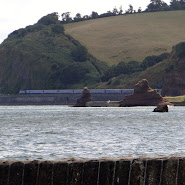
Along the Great Western......


 www.parliament.uk

| High Speed Rail: On Track? - Transport Committee | |
|
Government response
Introduction
The Government welcomes this opportunity to respond to the Transport Select Committee's recommendations on HS2. We are pleased to note the Committee's support for the strategic case for HS2 and agree with its view that "HS2 is needed to provide a long-term increase in the capacity of the railway and that alternative proposals to increase capacity are not sufficient to accommodate long term forecast demand" (paragraph 12).
Costs Recommendation 1: DfT communications about HS2 should emphasise that the estimated cost is £28billion not £50billion and that cost increases to date have largely been due to the decision to undertake more tunnelling and other work to mitigate the impact of the project on people living near the route. (Paragraph 17)
The Government agrees that clear communications around the costs of HS2 are important. In common with all large infrastructure projects, as the detailed design of the project matures, so can our confidence in the cost estimate improve. In accordance with programme and project management best practice we have set an appropriate level of contingency to take account of the uncertainties and risks inherent in a project of this scale and complexity at this relatively early stage of its development. It would be misleading to exclude these contingency allowances when setting out the total expected cost of the project. We estimate the total cost of the project to be £50 billion. This comprises a total of £42.6bn for Phase 1 and Phase 2, of which £14.4bn is contingency and £7.5bn for rolling stock, of which £1.7bn is contingency. This estimate is presented at a P95 level, meaning that there is a 95% level of confidence that the project can be delivered for this cost. All prices are quoted at Q2 2011 prices and exclude VAT. We are not complacent in seeking to ensure that the project continually bears down on cost. We have set HS2 Ltd a target price for Phase 1 of £17.6bn and have implemented a clear delegations framework which sets out responsibilities and establishes a clear governance and approval framework which is designed to maintain a tight grip on costs. Adding to this, as the committee may be aware, Sir David Higgins will be reporting to the Secretary of State in March to consider how the benefits of the scheme can be maximised and delivered earlier, and how costs of the scheme could be reduced within that assessment. Turning to the Committee's point about cost increases, Government agrees that in part the cost increase is due to design and environmental changes to improve the scheme, including the addition of further tunnelling, which will greatly reduce the impacts of the project on local communities and the environment. However it is also the case that, informed by further development work, the level of contingency has been reviewed to better reflect the current uncertainties and risks of the project at this stage. Construction Recommendation 2: We recommend that Sir David Higgins' report to ministers by the end of 2014 on options for speeding up HS2 so that trains run north of Birmingham on high speed routes well before 2032/33, as currently envisaged. We would also like Sir David to report on building north to south concurrently with building south to north. (Paragraph 18)
Sir David Higgins has already been tasked by the Secretary of State to consider three important issues. Firstly, how to deliver the extra capacity HS2 will bring as quickly as possible to relieve pressure on commuters and provide increased connectivity for towns and cities in the Midlands and the North. Secondly, how plans for HS2 can be fully integrated with the existing railway network to ensure benefits are felt across the country, and not just the route. Thirdly, how costs can be clearly tied to meeting those two objectives, and how the programme can be delivered as efficiently as possible. The report therefore is likely to consider if and how project delivery can be brought forward and the phasing of construction. Sir David will report to the Secretary of State in March 2014.
Appraisal methodology Recommendation 3: We recommend that the Government review the appropriateness of applying its standard appraisal methodology to large projects with national significance, with the aim of ensuring that the appraisal of such projects in future is not unduly based on benefits accruing to individual travellers rather than wider society. (Paragraph 24)
We agree with the Committee's recommendation. We continuously review the appropriateness of our methodology and note the Committee's views. In October, the Department published a set of documents on "Understanding and Valuing the Impacts of Transport Investment" alongside updates to our appraisal methodology, which included our plans to develop an Analytical Strategy for our appraisal framework and methods.[2][2]. The Analytical Strategy will be informed by engagement with stakeholders and experts and to support this, we plan to create a Transport Appraisal and Modelling Panel. This will comprise experts and stakeholder representatives, to help build consensus, and ensure we draw on the best available evidence.
Wider economic benefits and regional impact Recommendation 4 and Recommendation 8. We recommend that the Government should recognise the current limitations of the work undertaken by KPMG in making public use of the KPMG estimate of wider economic benefits arising from HS2. We look forward to this analysis being further developed, including by recognising the impact of other continuing and proposed rail investments. (Paragraph 29) We recommend that HS2 Ltd continues to sponsor further independent research on the wider economic impacts of HS2. (Paragraph 36)
We agree with the Committee's recommendations. Measuring the impact of major transport investment on economic geography is incredibly complex, but it is important to develop the tools and techniques that allow us to estimate these important potential effects. As the first step in developing the evidence in this area, KPMG's work is an important and valuable contribution to the debate, although we accept that it is not the final, or only, answer. The report clearly sets out the methodological approach and highlights its limitations. The report also acknowledges that the results presented are initial results, based on August 2012 data, and should therefore be treated as provisional. We recognise that there is a lack of consensus on the best analytical approach in this area and alternative approaches could produce results that range in scale. Any modelling relies upon assumptions, and naturally involves some degree of uncertainty in terms of precise impacts. The analysis by KPMG represents the first attempt to measure the impact of HS2 on productivity, and the distribution of economic activity across the country. We are confident that the approach tackles the right questions, is intuitively sound and that the results are credible. We will continue to refine our understanding of the impacts of HS2 on the economy and will consider how best to develop and deepen the evidence base in this area.
Recommendation 5 and 6: We recommend that DfT, HS2 Ltd and NR work together to identify potential "High Speed Britain" projects by the end of 2014. (Paragraph 32). Work to identify service patterns freed up by the construction of HS2 should be speeded up in order to provide firmer evidence of the project's broader benefits.
The Government agrees that it is important to spread the benefits of HS2 as widely as possible. Working closely with HS2 Ltd and NR is clearly a key part of this and we are putting plans in place already which will allow us to do this more effectively. Work to identify new post HS2 service patterns is very important and will be a fundamental part of our future work programme. One of the key aims for future service patterns is that all towns or cities which currently have a direct service to London will retain broadly comparable or better services once HS2 is completed. Decisions on future services will be taken nearer the time, but we will shortly be taking the next step in considering long-term issues, opportunities and options for rail services on HS2 corridors; factoring in how these services can support the delivery of economic growth on a sustainable basis. A wide range of views will be sought, including from train and freight operators, as well as members of Parliament, and other interested parties such as local and regional bodies. We will announce further details of the process shortly.
Recommendation 7: We recommend that as soon as possible after receiving the [HS2] Growth Task Force's report, the Government publish a strategy for ensuring that UK firms and workers gain maximum benefit from HS2, building on current experience with the Crossrail project. This work should help ensure that the benefits of HS2 are spread throughout the UK and are seen to be relevant to the whole of the country (Paragraph 35) The Government agrees that ensuring that UK firms and workers gain maximum benefit from HS2 is vital. We aim to build on and develop best practice from projects like the Olympics, Crossrail and the Intercity Express programme (IEP) in making sure that UK businesses are well placed to bid for contracts, while running a competitive process that gets the best price and quality for taxpayers. The Growth Task Force report, expected this spring, will make recommendations on how we can maximise the opportunities for regeneration, growth, jobs and UK businesses that HS2 offers and we look forward to considering its conclusions. With regards to procurement, HS2 Ltd has already begun an extensive process of consultation with industry partners and expects to set out its proposed approachin mid-2014.This approach will be informed by the Growth Task Force report. More widely, the whole of Government is working in partnership with industry to set the long term direction needed to give businesses the confidence to invest - creating more opportunities, skilled jobs and making the UK more competitive so that British businesses can thrive and compete with rising economies. DfT is working with the Department for Business, Innovation and Skills to ensure we harness the synergies between this work and our approach to HS2. In addition, the Government has recently announced its intention to establish a new college to train the next generation of world-class engineers to work on the construction of HS2. The college will deliver the specialised training and qualifications needed for high speed rail, which will benefit HS2 and other future infrastructure projects across the country. It will offer the necessary technical training to make HS2 a success and ensure it can be built by skilled British workers. Recommendation 9: In our view, HS2 can help promote economic growth in the UK's major city regions and contribute to a rebalancing of the economy. However this will not happen automatically. Local authorities and Local enterprise Partnerships must develop economic development strategies to make the most out of HS2 and they must be supported in doing this by central Government. (Paragraph 38) We agree with the Committee's recommendation. We look forward to seeing how local partners are using the Growth Deal process, including developing strategic economic plans, to focus local resource on maximising the growth and jobs potential of HS2.
2 2 h ttps://www.gov.uk/government/publications/transport-appraisal-in-investment-decisions-understanding-and-valuing-the-impacts-of-transport-investment Back
|
|
| Cancellation of the InterCity West Coast competition: Government update on the Laidlaw and Brown reports - Transport Committee | |
|
Introduction
Since its cancellation of the West Coast franchise procurement on 2 October 2012, Department for Transport has worked hard to ensure that a similar situation does not arise again. The Department has recognised the series of errors and misjudgements that led to the flawed process identified by Sam Laidlaw in his independent report of 6 December 2012. It has taken wide-ranging actions to put in place rigorous and robust processes which will help prevent the occurrence of such misjudgements in future. This report to the Transport Select Committee provides an overview of the actions taken so far in response to recommendations from Mr Laidlaw and also others. It is accompanied by a clear recognition in the Department that these actions constitute a commitment to real action and change. Underlying each individual action is an absolute commitment at all levels of the Department to ensuring that the Laidlaw prescription - about clarity of process, clarity of responsibility, adequacy of resourcing, openness to challenge and escalation and honesty about risk - is well understood and applied in all parts of the Department's business. The report supplements the Department's response to the Brown report provided in July 2013. We do not repeat substantive points but where appropriate we have included further information. The recommendations made by Mr Laidlaw and others have also informed the Department's Departmental Improvement plan, due end of March 2014. This plan will provide a robust assessment of the Department's current performance and outline a set of actions to help strengthen where required. Department for Transport's senior leadership team has kept a close watch over the organisation's response to all of these recommendations which have been taken forward as part of our overall change programme. The senior leadership has taken personal responsibility for this work, including by setting up a separate series of meetings dedicated to tracking and considering the Department's progress against the recommendations on a fortnightly basis.
Action taken by Department for Transport in response to the recommendations in the Laidlaw report
PLANNING AND PREPARATION
Department for Transport is committed to applying sound planning and strong management in its work, to ensuring the right expertise is involved and to being clear and open about the risks inherent in the large and complex transactions we invite our commercial partners to participate in. The Department has developed a full suite of franchise policies in consultation with the wider rail industry. Each of these policies reflect an element of the Brown report recommendations adopted by the Department: a) Developed a risk capital policy designed to ensure that bidders in franchise competitions are able to calculate in advance the quantum of risk capital they will need to provide for and which provides tax payers with the security that protects their interests. b) Published a detailed franchise procurement guide which clearly explains how bids are assessed, including where commercial judgement may be exercised. The guide also explains how the process is aligned with the Brown report's recommendations. c) Appointed external technical, legal and financial advisors for each competition. To underline their respective roles and responsibilities, all contractors are also provided with the Department's new Franchise Competition Guide. d) Established a robust regime of reviews for each franchise, from line management up through the Department's internal assurance teams (which include procurement professionals not involved with the franchise). External advice, challenge and stress testing is also provided by the Major Projects Authority and the Franchise Advisory Panel as well as the Department's technical and other professional advisors.
ORGANISATIONAL STRUCTURE AND GOVERNANCE
In hindsight, the Department had not taken sufficient care to put in place a clear governance structure for rail franchise competitions. In response to the recommendations made, the Department has restructured to put in place a simpler, clearer structure of governance for rail franchise competitions. Following on from this initiative, roles and responsibilities have also been clarified so that any individual involved with a franchise competition understands what is expected from them. Specifically with regard to organisational structure and governance, the Department has taken several actions (a number of which also meet recommendations made in the Brown report). The Department has: a) Restructured and established a single Director-General with responsibility for all rail. b) Appointed a single Director for the rail franchising programme. c) Established a programme management office for the franchise competitions and also the necessary processes so that i. each live competition has key roles filled with a Project Director with full accountability for each competition; ii. each live competition is supported by external advisors; iii. each franchise team is allocated resource as required to ensure the right mix of skills, experience and knowledge in the team. Additionally, the Department has taken a number of initiatives to strengthen the wider governance structure and assurance processes. The Department has: a) Reviewed the composition and constitution of decision making bodies involved in the delivery of franchising and implemented the requisite changes. The changes ensure a governance structure that is clear and delivers appropriate oversight and challenge of each franchise competition as well as other input and assurance. b) Ensured all senior responsible owners have gone through appropriate training on their responsibilities and all the Department's rail teams have gone through appropriate training programmes, including on how to manage external contractors effectively. c) Reviewed, documented and tested relevant quality assurance processes for elements such as economic modelling and forecasting, legal drafting and terms of reference. d) Ensured individuals' responsibilities are clearly documented, well-understood and reviewed at appropriate intervals. This includes the extent and limitations of delegated authorities, how to escalate issues and risks and also the Department's commitment to sound recordkeeping. e) Reviewed our approach on bidder anonymity and decided not to use an anonymous approach in future.
RESOURCES
Department for Transport fully recognises the importance of having the right people with the right skills, expertise and experience in place at the right time. With regular changes to both the work that must be done and the people available to do it getting this right requires regular review and adjustment of resources. However, the Department has developed a strong capability strategy and processes to match so that Departmental commitments and priorities are appropriately resourced. The actions taken to manage our resources in the best possible way and ensure appropriate resources are available for all of the Department's projects include the following: a) Ongoing recruitment to rail franchising based on a training gap analysis and a skills review, supplemented with appropriate use of secondments and interim appointments for certain core skills gaps. The majority of the vacancies in rail franchising have been filled. b) The corporate resourcing process for 2013-14, which prioritised rail franchising, was reviewed by Ministers to ensure appropriate senior scrutiny and challenge. A culture of open and honest exchange by staff at all levels with senior managers is fundamental to the way the Department does business. The Department recognises that senior leaders and managers have a vital role in demonstrating in action that honesty is welcomed and that nobody is later penalised for raising issues that their colleagues may find uncomfortable or challenging. In parallel, we have endeavoured to change the tone of dialogue with the rail industry to something that is more open. Other work has been undertaken to raise awareness across the Department of everyone's individual responsibility as employees of Department for Transport to identify, escalate and manage risks. The Department has implemented a new risk policy and relaunched its whistle blowing policy which is now covered in the Department's leadership development programme. AUDIT The work of the Department needs to be assured through internal audit processes and gateway reviews by the Major Projects Authority. The Department has taken several initiatives to make sure these checks happen as a matter of course: a) Developed an integrated assurance and approval strategy which has become part of the Department's project documentation b) Reviewed and reset the Department's programme of internal audit c) Considered the findings of the review at senior level and taken action as required
WIDER ASSURANCE
In addition to the work outlined in previous paragraphs, the Department has also undertaken further wide-ranging reviews of its most significant modelling and procurement activity. This work established that the issues identified in Mr Laidlaw's report were specific to the West Coast competition rather than a symptom of a wider problem across the Department. Nevertheless, the Department has refreshed its analytical assurance framework and rolled out the new approach for use with all modelling activities. Similarly, the Department has developed a similar set of principles for procurement activity and now meet regularly with other government departments to share procurement assurance best practice.
In conclusion The cancellation of the West Coast Mainline competition has had an extensive and significant impact on the Department for Transport but this should not detract from our very considerable achievements. We have made real progress in responding to the recommendations set out by Mr Laidlaw. Our focus is now on building on this progress to embed new and more effective practices into the everyday work of the Department. Department for Transport will be delivering several huge infrastructure projects over the coming years. The scale of this challenge is significant and we are not underestimating what it will take for us to meet it. As a department, we recognise that to deliver on this agenda we need to learn from the cancellation of the West Coast mainline competition. We continue to apply these lessons in our efforts to be a modern, efficient and well-functioning department.
www.crossrail.co.uk

Paddington’s Eastbourne Terrace reopens to buses
Crossrail has delivered on a commitment to local businesses and residents as Paddington’s Eastbourne Terrace reopens to buses on schedule, following a two year closure to enable construction of the new Crossrail station. Download photos here.
London’s Transport Commissioner Sir Peter Hendy CBE drove the first bus down Eastbourne Terrace today ahead of it reopening to passengers from Saturday 15 February.
Bus routes 7, 23, 27, 36, 46, 159, 205, 332 and N7 will return to Eastbourne Terrace following a local diversion whilst the Crossrail works were being undertaken. Once Crossrail works are completed in 2018, bus stops on Eastbourne Terrace will provide passengers with an easy interchange with Paddington Station through a new Eastbourne Terrace entrance. An additional bus stop will also be provided on Eastbourne Terrace allowing passengers and residents easier access to local homes and business in the area.
There are no changes to bus route 436 with first and last stops continuing to be in Praed Street.
Ben Hardy, Crossrail’s Paddington Project Manager said: “It is fantastic to be able to deliver on our commitment to reopen Eastbourne Terrace as planned in February 2014. Crossrail, Network Rail and TfL have worked closely with Westminster City Council, businesses and residents to do all we can to deliver these major works in the least disruptive way possible.”
When complete, Crossrail will significantly reduce journey times from Paddington to the West End, the City and Docklands. Passengers will be able to reach Tottenham Court Road in four minutes, Liverpool Street in nine minutes and Canary Wharf in 16 minutes. Crossrail will also help transform and regenerate the area around Paddington station. During the peak, 24 Crossrail trains per hour will operate from Paddington to Whitechapel in each direction.
Excavation of the 250 metre long station has now reached the top of the tunnels, some 20 metres below the road. More than 400 people are continuing to construct the new station.
The road will be open to buses and construction vehicles only and other traffic, including cyclists, will continue to use alternative routes.
Pictures courtesy Crossrail.
Ends

|
Progressive Railroading Magazine Debuts Secure Rail Conference
February 3-4, 2015, in Orlando, Florida
February 10, 2014 – Milwaukee – Progressive Railroading magazine announced the dates for its new rail conference, Secure Rail. Focused on protecting and managing the security of rail technology, assets and people, Secure Rail will take place February 3-4, 2015, at the Sheraton Lake Buena Vista Resort in Orlando, FL.
“There are several conferences that only address the narrower issue of rail safety,” says Progressive Railroading Publisher Steve Bolte, explaining the genesis for the new event. “Secure Rail is the first conference that addresses North American rail security from an organizational perspective. Conference sessions will feature strategies and insights from industry experts on how to manage employees, passengers, technology and assets, and protect them from man-made threats and dangers.”
Conference topics include:
- Port Security
- TSA Assessments
- Hazmat Transport
- Surveillance and Cyber Security
- Emergency Preparedness
- IT Security
In addition to the more than 20 conference sessions, Secure Rail will feature several networking opportunities, including chances to engage with leading industry suppliers via tabletop exhibits.
|
FRENCH National Railways (SNCF) managed to achieve a 0.5% increase in turnover to €32.2bn and a 2% rise in Ebitda to €2.8bn in 2013 despite a 1.8% drop in revenue from its Geodis freight business..
THE FIRST of three class DP3 three-car dmus being supplied by Pesa, Poland, to Belarus Railways (BC) arrived in Belarus on February 11.
THE United States' Railway Supply Institute Committee on Tank Cars (RSICTC) has called on the US Department of Transportation (USDOT) to speed up the process to introduce new safety measures for tank wagons carrying crude..
UKRAINIAN Railways (UZ) suspended operation of all 10 HRCS2 emus supplied in 2012 by Hyundai Rotem for inter-city operations on February 13, with all of the emus undergoing technical checks.
Other News..
Funding constrains ambitions in 2014 Indian Railways budget - Railway Gazette
Union Pacific announces $3·9bn capital plan for 2014 - Railway Gazette
ISSUU - RailStaff February 2014 by Rail Media
|
|


No comments:
Post a Comment
Tell us your Railway News!